
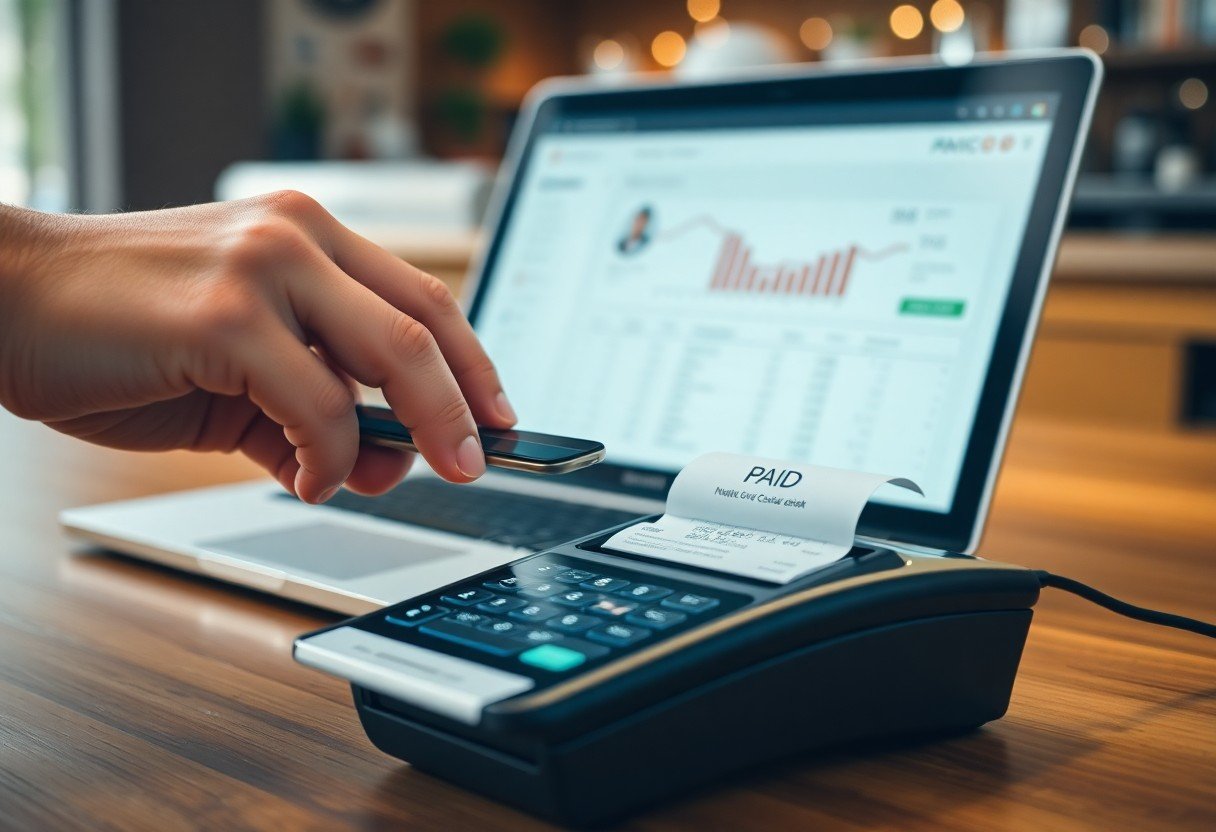
Most of your payment delays stem from unclear invoices, limited payment options, or slow follow up. To speed up collections, you should issue concise, itemized invoices with clear due dates, offer multiple online payment methods, automate reminders and late notices, and use incentives or early payment discounts. Make onboarding and dispute resolution simple, provide a self-service portal, and align terms with customer cash cycles so you reduce friction and accelerate cash flow.
Key Takeaways:
- Issue clear, itemized invoices with due dates and one-click payment links.
- Offer multiple payment methods (card, ACH, digital wallets) and mobile-friendly checkout.
- Automate invoicing, reminders, recurring billing, and reconciliation to reduce delays.
- Use early-payment discounts and enforce late fees to shift behavior.
- Set transparent terms, speed up onboarding and dispute resolution to remove payment blockers.
Understanding Customer Payment Processes
Your customers’ payment journeys run through invoice receipt, internal approvals and bank settlement; enterprise buyers often require 3-5 approval steps and 30-90 day payment windows, while SMBs typically clear invoices in 7-14 days. You should map touchpoints – invoice format, PO matching, dispute handling – because missing POs or mismatched line items drive many delays. Standardizing invoices and adding one-click payment links reduces reconciliation friction and speeds collections.
Common Payment Methods
You’ll encounter cards, ACH, wires, checks and digital wallets: card payments usually settle in 1-2 business days with fees of about 1.5-3.5%, ACH moves funds in 1-3 business days (same‑day ACH available), wires clear same day but cost more, and mailed checks add 5-10 business days. Digital wallets and instant-bank-pay options often post funds immediately, so offering multiple rails lets customers pick speed or cost.
Factors Influencing Payment Speed
Invoice clarity, payment rails, approval workflow complexity and your customers’ payment terms drive speed; moving from net‑60 to net‑30 shifts expected DSO by roughly 30 days. Disputes on 10-20% of invoices and missing remittance details create reconciliation delays. You can cut lag by enabling e‑invoicing, embedding pay links, and aligning terms with customer cash cycles.
- Invoice design: include PO, line-item totals, due date and a clickable pay button to remove reconciliation friction.
- Payment rail availability: customers choose ACH for lower cost, cards for speed despite fees; offering both increases on-time rates.
- Approval workflow: 3-5 approvers or three-way matching can add 3-10 business days to processing.
- Assume that offering a 2%/10 early-pay discount converts about 25-35% of invoices to faster payment and materially reduces DSO.
You should also segment customers by payment behavior and run targeted interventions: for high-value accounts, negotiate shorter terms or net-net agreements; for price-sensitive SMBs, prioritize low-cost rails like ACH. Track DSO, percentage paid on time and dispute rates weekly. Implement painless experiments – e.g., test 2%/10 on a 10% sample cohort and measure conversion within one billing cycle to validate impact.
- Automate invoicing and remittance capture to lower manual reconciliation and reduce disputes.
- Offer tiered payment options: immediate card for urgent invoices, ACH for cost-sensitive payers, and negotiated net terms where needed.
- Use targeted incentives (early-pay discounts) and clear late-fee policies to shift payer behavior.
- Assume that A/B testing term changes on a 10% customer sample will reveal meaningful DSO and on-time payment lifts within one billing cycle.
Best Practices for Speeding Up Payments
Standardize terms like 2/10 Net 30 and display due dates prominently, automate reminders at 7, 3 and 1 day before due, and include clickable payment links on every invoice. Automate reconciliation where possible and offer small early-payment discounts to incentivize faster settlement. Combining clear terms, automation, and a payment link reduces manual follow-up and shortens your cash conversion cycle.
Clear Invoice Instructions
You should place payment method options, exact bank details, invoice number and due date at the top of the invoice. Provide an ACH example (Bank X, Account 123456789, Routing 011000015), SWIFT for internationals, and the preferred remittance email. That level of detail prevents back-and-forth, speeds customer action, and makes reconciliation painless.
Offering Multiple Payment Options
Offer ACH (typically 1-3 business days), card payments (instant authorization; processing fees ~2-3% + $0.30), same-day domestic wires (fees $15-50), and digital wallets like PayPal or Apple Pay for convenience. Present these options clearly on the invoice and let customers choose the fastest, most convenient channel for them.
Segment your approach: enable ACH and wire for large B2B clients, provide card and wallet options for smaller or consumer-facing accounts, and use card-on-file or direct debit for recurring billing. Implement tokenization to reduce friction for repeat payers, and consider small discounts for low-fee methods (e.g., 1-2% for ACH) to shift behavior without eroding margin.
Technology Solutions for Faster Payments
You can accelerate collections by combining automated invoicing, payment orchestration, and real‑time rails. Platforms like QuickBooks, Xero, SAP and payment orchestration tools provide APIs, payment links, and reconciliation automation that reduce manual work and errors. Many firms report DSO improvements of 10-30% after adopting these tools, with immediate gains from adding clickable payment links and automated reminders.
Automated Invoicing Software
You should use recurring invoices, PCI‑compliant payment links, and automated reminder sequences to shrink payment cycles. Integrations with QuickBooks, Xero or SAP let you auto‑post receipts and reconcile in minutes; e‑invoicing and EDI reduce manual entry. Studies show automated reminders and one‑click payment links can increase on‑time payments by roughly 20-30%, cutting collections effort and disputes.
Real-Time Payment Systems
You can route invoices over instant rails like SEPA Instant (settlement under 10 seconds), UK Faster Payments or The Clearing House RTP in the US to receive cleared funds 24/7. Real‑time settlement removes float, enables immediate reconciliation via webhooks, and supports instant refunds and supplier payouts-ideal for net‑terms compression and high‑velocity B2B billing.
Adopting RTP requires bank onboarding, API integration, and updated ledger logic; banks often set per‑transaction fees and optional caps, so you must model costs versus DSO gains. Use webhooks and ISO 20022‑formatted messages for automated posting, and prepare workflows for instant dispute handling. For example, merchants that enabled RTP for supplier payments cut receivables lag from days to minutes while improving cash visibility.
Building Strong Customer Relationships
Deepening trust with your customers shortens payment cycles: offer clear escalation paths, early‑payment discounts like 2/10 Net 30, and flexible schedules for high‑volume buyers. Use account reviews to spot friction-many firms cut DSO by 10-20% after implementing simple relationship practices. Provide a single point of contact and share resources such as 5 Ways to Speed Up Payments on Your Receivables to reinforce best practices.
Communication and Follow-Ups
Establish a consistent cadence: send the invoice immediately, a reminder 7 days before due, one on the due date, and follow up at 3 and 10 days late; personalize messages for top 20% of receivables. Combine automated emails with a brief phone call for balances over $5,000 to speed approvals-that mixed approach often lifts on‑time pay rates by ~25-30%.
Customer Education on Payment Terms
Onboard customers with a one‑page payment guide and a 10-15 minute walkthrough showing invoice layout, fields your AP team needs, and acceptable payment methods. Use clear examples of PO numbers and remittance instructions so your invoices don’t trigger internal rework or delays.
Go further by supplying a sample invoice, FAQ, and a short checklist AP can attach to their approval flow; run a 30‑day follow‑up to capture issues. Track KPIs-DSO, dispute rate, and average approval time-and aim to reduce disputes to low single digits by addressing the top two causes you uncover during onboarding.
Incentives for Prompt Payments
You should combine positive and negative incentives to shift payer behavior: offer small, time-limited discounts (1-2% for payment within 7-10 days) and clearly state late penalties (for example, 1% per month). Use automated reminders tied to the incentives, measure uptake rates, and iterate-many finance teams see measurable improvements in days‑sales‑outstanding when incentives are explicit and consistently enforced.
Early Payment Discounts
Offer clear terms like 2/10 Net 30 or a 1-1.5% discount for payment within 7 days to motivate speed without eroding margin; pricing models show such discounts typically cost less than short‑term borrowing. For instance, a mid‑market distributor raised early payments from ~15% to ~40% after switching to a 1.5%/7‑day program and automating the discount on invoices.
Penalties for Late Payments
Set a visible late fee policy-common approaches are a flat $25-$50 fee or interest around 1% per month (≈12% APR) after a brief grace period. You must display the policy on invoices and in contracts, ensure it complies with local law, and apply it consistently to deter habitual late payers while keeping high‑value client relationships intact.
For practical implementation, use a 5-7 day grace period, then apply interest to the outstanding balance and trigger automated past‑due reminders; escalate unpaid accounts after 30-60 days to collections or hold future shipments. Tracking metrics like percent of invoices incurring fees and days past due helps you balance revenue recovery against customer retention-many teams automate fee application to avoid manual disputes and speed resolution.
Monitoring and Analyzing Payment Trends
Monitor payment trends with a weekly dashboard showing Days Sales Outstanding (DSO), on-time payment rate, dispute frequency and electronic payment adoption; you can spot shifts quickly by comparing 30/60/90‑day buckets and month-over-month cohorts, for example detecting a rise in 60+ day balances that signals workflow or approval delays needing immediate action.
Tracking Payment Metrics
Track DSO, average days late, on-time percentage, dispute rate and collection rate, and segment by customer size, industry and payment method; target benchmarks like on-time >85% or DSO under 45 days, use automated reports to flag customers with rising days late and measure the impact of incentives (e.g., 1-2% early‑pay discounts) on behavior.
Adjusting Strategies Based on Data
Use A/B tests and cohort analysis to adjust reminder cadence, payment options and terms – for example moving reminders from 7/3/1 to 14/7/1 raised on-time payments from 78% to 89% in one pilot – and prioritize outreach by predicted likelihood to pay.
When you see patterns, take concrete steps: tighten credit or require partial prepayment for repeat slow payers, introduce targeted discounts for top 20% of invoices by value, or switch persistent late payers to electronic-only billing. Monitor results weekly, iterate for 4-8 weeks, and quantify impact: cutting DSO by 10 days on $1M receivables frees about $27,400 in cash (1,000,000*(10/365)), giving a clear ROI for the change.
Final Words
Now apply a mix of clear billing, multiple fast payment channels, automated invoicing and reminders, and simple, transparent terms so you reduce delays and disputes and protect your cash flow. Offer early‑payment discounts, streamline checkout, and monitor accounts receivable to prioritize follow‑ups. Use electronic invoices and payment links, enforce late fees when needed, and communicate proactively to keep relationships strong while improving liquidity.
FAQ
Q: What are the most effective first steps to speed up customer payments?
A: Start by eliminating invoice friction: send error-free invoices immediately after delivery, include a clear due date and outstanding total, and embed a one-click payment link. Offer multiple fast payment options (card, ACH with instant settlement where available, digital wallets) and enable mobile-friendly payment flows. Automate delivery and receipt confirmations so customers can act as soon as they get the bill.
Q: How should I structure payment terms and invoices to encourage prompt payment?
A: Use concise, visible terms: put the due date and total at the top, show accepted methods and late consequences, and break charges into clearly labeled line items. Consider shorter standard terms (e.g., Net 15 vs Net 30) or due-on-receipt for higher-risk accounts. Offer early-pay discounts and clearly display any discounts or penalties to make the benefit of early payment obvious.
Q: Which payment methods speed collections most and what trade-offs should I consider?
A: Card and instant ACH/RTP are fastest for cash availability, while traditional ACH and bank transfers are reliable and lower-cost but slower. Digital wallets and payment links reduce friction and increase conversion. Balance speed and fees: accept higher-fee methods for faster settlement on overdue or high-value invoices, and encourage low-fee instant options for regular customers through incentives or preferred pricing.
Q: How can automation and reminders be used without damaging customer relationships?
A: Implement a staged, personalized reminder cadence: pre-due reminder, due-day notice, then progressively firmer follow-ups with payment links and self-service options. Use customer segmentation and tone-matching-friendly for low-risk customers, firmer for habitual late payers. Automate reconciliation and status tracking so support teams intervene only when needed, keeping customer communication timely and relevant.
Q: What policies and incentives most reliably accelerate payment behavior?
A: Combine positive and negative incentives: offer dynamic early-pay discounts, bulk-settlement bonuses, or token rebates for on-time payment; enforce late fees and temporary holds on services for seriously overdue accounts. Use credit checks, set credit limits, and require direct debit for recurring billing. Monitor payment performance and adjust terms or require prepayment for customers who consistently pay late.